Make Scenic Stops Worth the Detour
The most common drops on a motorcycle tour happen below 5 mph at scenic overlooks. Learn to read turnout geometry, surface footing, and exit visibility before pulling off the line.
The Anatomy of a Safe Motorcycle Pull-Off
In a four-wheeled vehicle, pulling into a roadside viewpoint requires little more than checking the rearview mirror and braking. On a 550-pound touring motorcycle carrying another 70 pounds of luggage, an impulsive dive toward a scenic vista can quickly put your front tire into deep pea gravel or stall you on a steep, off-camber asphalt lip.
When scanning ahead for a photo stop or visor-cleaning break on routes like the Pacific Coast Highway (CA-1), Utah Route 12 along The Hogback, or the Dolomites’ Passo Pordoi, evaluate four physical markers before signaling:
- The Apron Lip & Surface Transition: Road maintenance crews resurface main lanes more frequently than unpaved turnouts, often leaving a 2-to-3-inch vertical asphalt drop-off at the shoulder edge. Cross this lip at a clean 30-to-45-degree angle rather than shallowly parallel, and release front brake pressure before the front wheel touches loose gravel.
- Cross-Slope Camber: Mountain turnouts are graded to shed rainwater toward the drainage ditch or cliff edge. If you park facing downhill or with the left side of the motorcycle facing up-slope, the bike may stand too upright for the sidestand or require backing uphill on slick stones. Always position the bike nose-uphill and leave it in first gear before deploying the stand.
- Sidestand Footing & Hot Tar: Fresh summer asphalt and damp meadow dirt let a narrow sidestand foot punch straight through under touring loads. Keep an anodized aluminum sidestand enlarger plate bolted to the foot or carry a corded puck in your left jacket pocket.
- Two-Way Sightlines for Re-Entry: Never pull into a turnout situated on the inside of a blind hairpin where accelerating back into traffic requires looking through rock walls or guardrails. Choose overlooks located on straight transitions or outer curves where oncoming riders and drivers have at least four seconds of clear visibility.
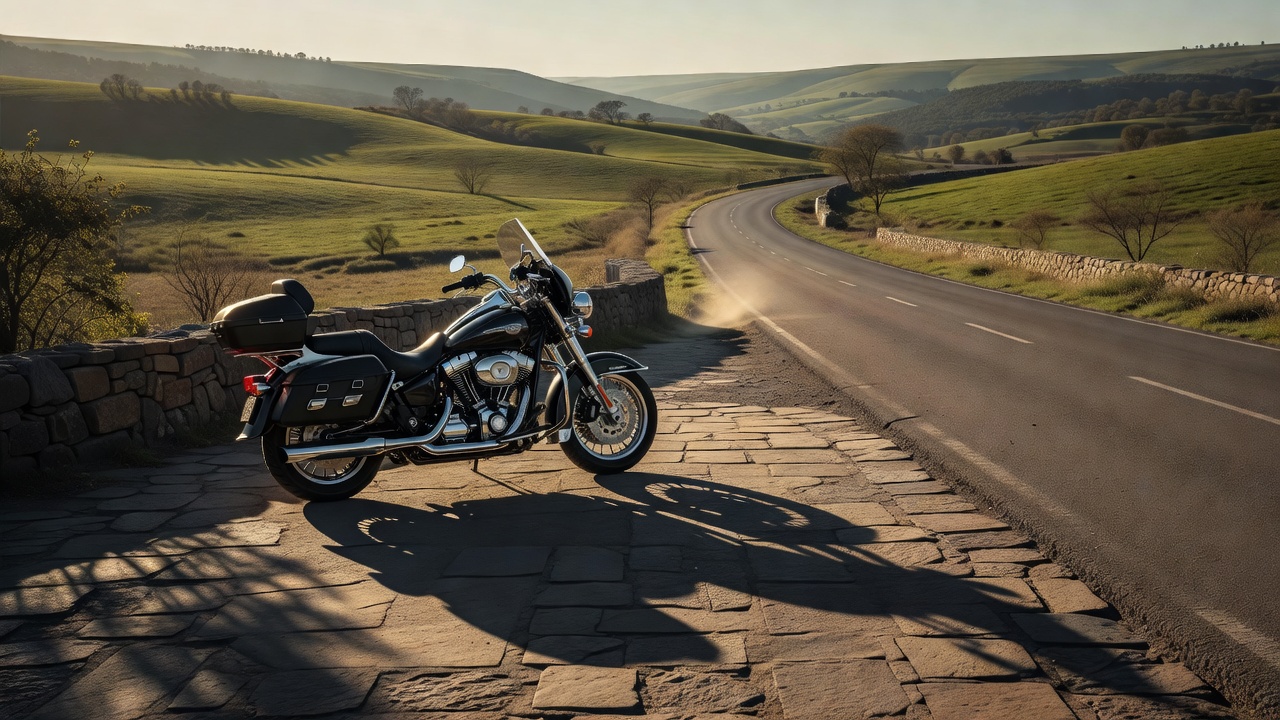
Always park nose-out toward your exit path on level ground so you never have to paddle a top-heavy bike backward into traffic.
Managing Remote Fuel Windows & Rural Closures
Scenic routes thrive in low-density landscapes—precisely where 24-hour service stations disappear. Across corridors such as Nevada’s US-50, eastern Oregon’s Steen Mountain loops, or northern Spain’s Picos de Europa valleys, small village stations may close between 13:30 and 16:30 or operate strictly via chip-and-PIN automated terminals that reject certain foreign magnetic cards.
Calculate your motorcycle’s headwind-adjusted range, not its brochure highway figure. Riding at 65 mph into a 25 mph Great Plains or Patagonian headwind with square aluminum panniers increases aerodynamic drag substantially, cutting fuel economy by 18% to 25%. Adopt the Half-Tank Rule once you leave major towns: whenever your fuel gauge crosses 50% and you pass an open pump with clean paved access, top up and combine the stop with your hydration break.
Evaluating Detours: When a Viewpoint Costs Too Much Time
Many famous viewpoints sit at the end of a 6-to-12-mile dead-end spur road—such as Dalsnibba above Geiranger in Norway, Clingmans Dome off US-441 in the Great Smoky Mountains, or Glacier Point off Wawona Road. Before committing to a spur detour mid-afternoon, weigh the trade-offs:
If reaching the lookout requires a 20-minute uphill hike in heavy CE Level 2 armored trousers and stiff touring boots while leaving helmets unattended in a congested lot, you may enjoy the day far more by selecting a flowing ridge-top café stop where you can sit comfortably in the shade within sight of your machine.
The 75-Minute Micro-Break Routine
Waiting until your knees ache or your shoulders cramp means dehydration and static posture fatigue have already set in. Set a quiet 75-minute interval timer. A disciplined 8-minute roadside micro-break accomplishes four things efficiently:
- Drink 250–300 ml of plain water (avoid heavy sugary energy drinks that trigger mid-afternoon drowsiness).
- Spray and microfiber-wipe your helmet shield before dried insect proteins bake onto the polycarbonate coating.
- Perform 60 seconds of hip flexor extensions and neck rotations off the bike.
- Walk one slow circle around the motorcycle, glancing at rear tire tread for picked-up nails, fork seals for oil mist, and luggage straps for tension.