Prepare for Comfort Before Departure
Discomfort on a motorcycle is not merely unpleasant—it is a primary distraction hazard. Dial in your protective layers, cockpit ergonomics, and chassis settings before day one.
Protective Riding Gear Built for Changing Climates
During a single seven-hour mountain touring day, a rider can easily experience a 45°F (25°C) temperature swing alongside sudden valley rain squalls. Gear that works for a 45-minute Sunday morning ride quickly reveals its flaws on day four of a long tour.
- Abrasion & Impact Standards: Look for garments certified to EN 17092 Class AA or AAA for road touring, paired with viscoelastic EN 1621-1 Level 2 limb armor and an EN 1621-2 Level 2 back protector (such as D3O or SAS-TEC). Viscoelastic armor remains pliable during long hours in the saddle but locks molecules upon impact.
- Laminated Shells vs. Drop-Liners: Traditional three-layer touring jackets with a removable internal waterproof liner allow water to soak through the outer Cordura shell. Once saturated, the heavy wet jacket chills the rider via wind-driven evaporative heat loss and takes all night to dry in a hotel room. A 2-layer or 3-layer bonded laminate shell (or carrying an external high-visibility waterproof rain suit over a well-ventilated Class AA mesh/textile suit) sheds water at the outer surface and dries in minutes.
- Base & Mid-Layering: Never wear cotton against the skin on a tour; cotton retains perspiration and conducts heat away from your core when climbing into cool mountain air. Use 150–200 gsm merino wool or synthetic grid-fleece base layers, and pack a 12V heated vest or compact synthetic mid-layer rather than multiple bulky sweaters that restrict elbow movement.
- Helmets & Acoustic Protection: Choose a full-face or ECE 22.06 / Snell M2020 dual-homologated modular helmet fitted with a Pinlock 120 MaxVision insert. Even the quietest touring helmet generates roughly 95 to 102 dBA of wind turbulence at 65 mph—well above the 85 dBA threshold where cumulative hearing damage and auditory fatigue begin. Wear acoustic-filter or molded silicone earplugs on every single leg.
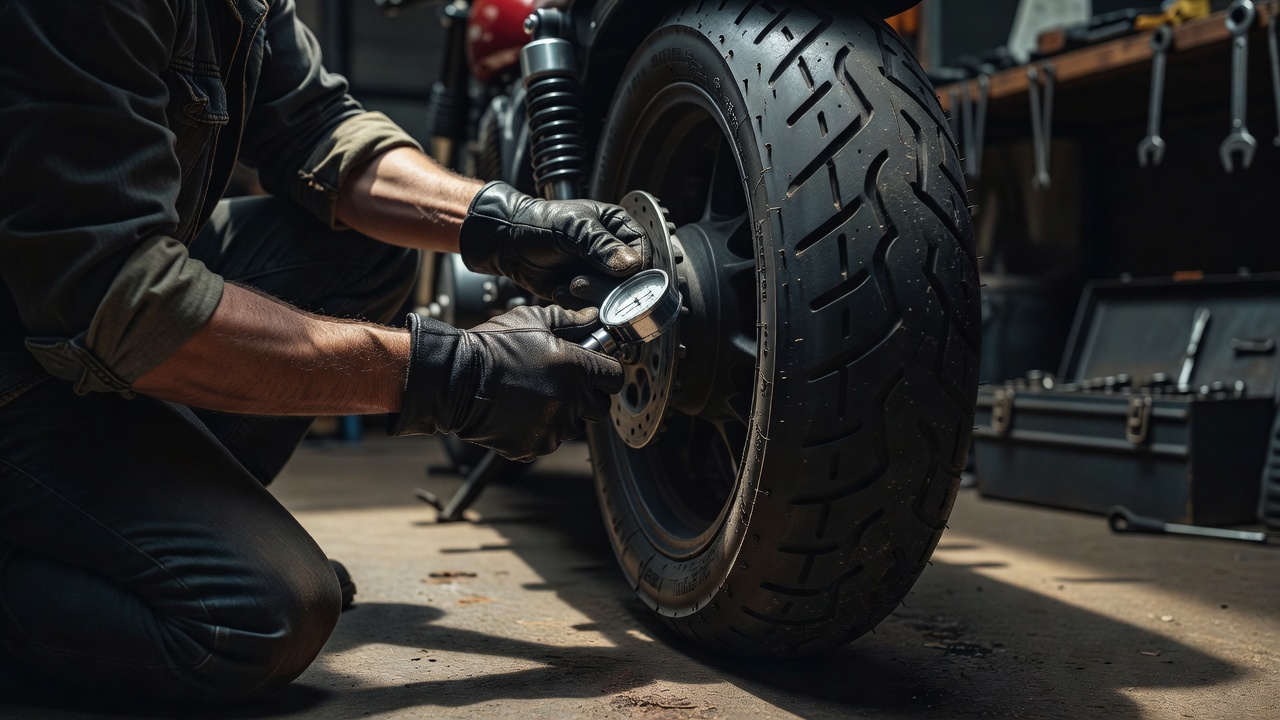
Checking cold tire pressures and adjusting rear suspension preload for luggage weight prevents vague steering and premature center-tread squaring.
Cockpit Ergonomics & Wind Management
Minor ergonomic mismatches amplify over 1,000 miles. Make any handlebar riser, lever angle, or windscreen change at least two weeks before departure so your muscles adapt and you can verify cable and brake-hose slack at full lock.
- Windscreen Buffeting vs. Clean Air: A taller windscreen is not automatically better. If the top edge of a tall screen sheds vortex turbulence directly onto the crown of your helmet, your neck muscles will fight low-frequency buffeting all day. Often, adjusting screen angle with an airflow spoiler lip—or lowering the screen slightly so your helmet sits in smooth, laminar airflow—eliminates head shake immediately.
- Control Lever Angles: Sit on the bike in your riding posture and extend your fingers straight over the clutch and front brake levers. Your wrists should form a flat, straight line from forearm to knuckles. Levers rotated too high pinch the carpal tunnel and cause right-hand numbness within an hour.
- Seat Support: Soft gel or thick foam seats frequently compress after 90 minutes, creating pressure points on the ischial tuberosities (sit bones). Firm, wide, anatomically contoured foam saddles or breathable 3D mesh seat covers (which circulate air and drain rainwater) sustain circulation far better over full days.
Pre-Departure Mechanical & Emergency Toolkit Dossier
Expand each inspection module below to review the mechanical checks and self-reliance tools recommended before leaving home.
A tire that looks "half-worn" in your garage will wear exponentially faster during the second half of its tread life, especially on coarse volcanic or chip-seal touring asphalt with full luggage weight. If a tire has less than 60% usable tread remaining for a 2,000+ mile trip, mount fresh rubber before departure and scrub it in for 50 miles locally. Inspect brake pad friction thickness (minimum 3 mm before a long mountain trip) and ensure brake fluid has been flushed within the last 18 months to prevent boiling on long alpine descents.
Carry tools specific to your motorcycle’s fasteners (Torx, hex, or metric sockets—never rely solely on the basic factory pouch). For tubeless tires, carry sticky-string bacon strips or mushroom plugs (such as Dynaplug or Stop & Go), side-cutters/pliers to extract nails, and a compact battery/12V micro-compressor tested on your bike’s accessory socket. Check that you have the correct socket size to loosen your rear axle nut so you can adjust chain slack at any roadside motel.
Losing a chipped immobilizer key or keyless fob 400 miles from home turns a minor mishap into a flatbed recovery. Carry a tested spare ignition and pannier key zipped inside an inner jacket pocket (or swapped with your riding partner)—never locked inside the panniers themselves. Keep a waterproof card with emergency contacts, blood type/allergies, and breakdown policy numbers in your left breast pocket.